When clients ask “Where does enzyme come from”, the answer at Jinan HEMU is far more than a simple definition of microbial origin. Every enzyme product delivered to global feed, food, textile and biofuel industries originates from a complete, closed-loop biotech system built over decades: starting from natural microbial mining, strain engineering, controlled deep fermentation, precise downstream purification, stable formulation to rigorous full-chain quality control, all developed, optimized and manufactured entirely within Jinan HEMU’s independent R&D and production ecosystem.
Natural wild strains rarely meet industrial standards directly, so our scientists carry out iterative mutagenesis, directed evolution and protein engineering to remodel strain genes, upgrading enzyme activity, thermal tolerance, pH adaptability and anti-degradation performance tailored to real production scenarios. For feed enzymes, we engineer strains to produce pelleting-resistant enzymes stable under 80–90℃ high-temperature extrusion; for food processing, we optimize biocatalysts with low impurity and high substrate conversion efficiency. Long-term joint R&D with universities and microbiology research institutes further expands our strain development capacity, enabling customized strain transformation for special industrial demands.
After obtaining stable high-yield engineering strains, enzymes enter Jinan HEMU’s automated fermentation production stage—the core process where microbes synthesize target biocatalysts. Our large-scale manufacturing base hosts over 10 standardized submerged fermentation bioreactors with a annual capacity of 15,000 metric tons, complying with ISO22000, FAMI-QS, Halal and Kosher global certification standards. The production flow follows strict aseptic seed expansion: preserved master strains are activated in test tubes, amplified through shake flasks and multi-stage seed tanks, then inoculated into thousands-liter main fermenters. Precision sensors real-time monitor temperature, dissolved oxygen, pH and nutrient concentration to create the optimal growth environment for microbes. Under controlled fed-batch fermentation, engineered strains continuously secrete crude enzymes into liquid broth over dozens of hours. Unlike chemical synthesis, this bio-based production method relies on natural microbial metabolism, generating far fewer toxic byproducts and aligning fully with global green manufacturing trends.
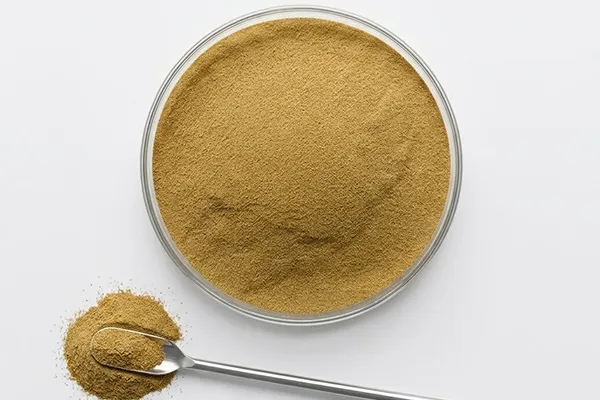
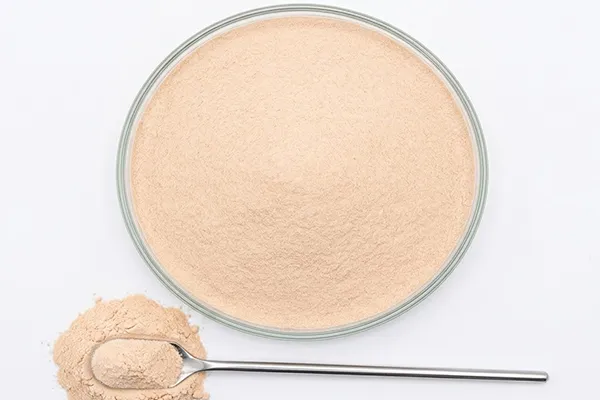
Once fermentation finishes, downstream separation and purification extract pure active enzymes from broth, eliminating mycelium, residual medium and miscellaneous proteins. Jinan HEMU adopts multi-stage filtration, ultrafiltration concentration and selective precipitation technologies to separate target enzymes efficiently. Purified liquid enzymes are then formulated into liquid concentrates or spray-dried into solid powder products, with protective additives added to extend shelf stability during transportation and storage.
Beyond R&D and manufacturing, Jinan HEMU’s enzymes are also shaped by front-end application research, which decides what enzymes we develop in the first place. Our technical team maintains close communication with global clients to identify industrial pain points—low raw material yield, high chemical consumption, excessive energy loss—and translate these demands into targeted enzyme development projects. Every enzyme launched by Jinan HEMU is not just a microbial metabolite, but a customized biotech solution refined through strain upgrade, process iteration and application verification.
To sum up, enzymes from Jinan HEMU trace their roots to natural microbial genes, mature through professional strain engineering, take shape in precise automated fermentation, gain purity via advanced separation technology, and achieve commercial value through application-driven optimization. This complete self-controlled industrial chain allows Jinan HEMU to trace every enzyme’s origin, guarantee stable, eco-friendly biocatalyst supply worldwide, and continuously replace polluting chemical additives with natural, sustainable enzyme solutions for global industrial upgrading.
 English